
Mobile app development has become one of the most powerful drivers of digital transformation for businesses worldwide. From startups to global enterprises, organisations are investing heavily in mobile applications to engage customers, streamline operations, and boost revenue. With billions of smartphone users globally, having a robust mobile presence is no longer optional, it’s essential.
In this guest post, we’ll explore the fundamentals, process, trends, and benefits of mobile app development in 2026 and why it remains a gamechanger for businesses across industries.
What is Mobile App Development?
Mobile app development is the process of creating software applications that run on mobile devices such as smartphones and tablets. These apps can be pre-installed, downloaded from app stores, or accessed through mobile browsers.
There are three primary types of mobile applications:
Native Apps – Built specifically for Android or iOS using platform-specific languages.
Cross-Platform Apps – Developed using frameworks like Flutter or React Native to run on multiple platforms.
Web Apps – Browser-based apps that function like mobile apps without installation.
Each type has its advantages, depending on business goals, budget, and user needs.
Why Mobile App Development is Crucial for Businesses
Businesses today rely on mobile app development to stay competitive and relevant. Here’s why:
1. Direct Customer Engagement
Mobile apps allow businesses to communicate directly with users through push notifications, in-app messages, and personalized content.
2. Improved Brand Visibility
An app icon on a user’s phone increases brand recall and trust.
3. Higher Conversion Rates
Apps offer smoother user experiences compared to websites, leading to better conversions.
4. Data Collection and Insights
Mobile apps provide valuable user behavior data that helps businesses make data-driven decisions.
5. Competitive Advantage
Companies with innovative apps often outperform competitors without mobile solutions.
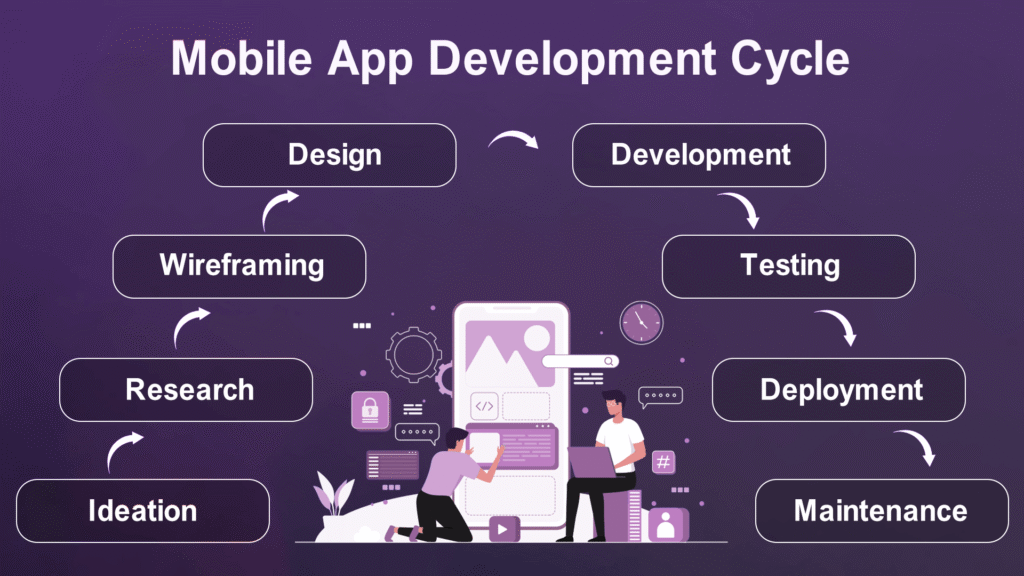
The Mobile App Development Process
A successful mobile app development project follows a structured process:
Step 1: Idea & Research
Understand the target audience, define the problem, and analyze competitors.
Step 2: Planning & Strategy
Choose the right platform (iOS, Android, or both) and technology stack.
Step 3: UI/UX Design
Design an intuitive interface that ensures smooth user experience.
Step 4: Development
Develop the frontend and backend of the application using appropriate frameworks.
Step 5: Testing
Perform rigorous testing for performance, security, and usability.
Step 6: Deployment
Publish the app on Google Play Store and Apple App Store.
Step 7: Maintenance & Updates
Regular updates keep the app secure and aligned with user expectations.
Latest Trends in Mobile App Development (2026)
Technology is evolving rapidly, and mobile app development is keeping pace with emerging trends:
Artificial Intelligence & Machine Learning
AI-powered chatbots, voice assistants, and personalized recommendations are becoming standard.
5G Technology
Faster internet speeds enable better app performance and real-time features.
Internet of Things (IoT)
Apps now control smart devices, from homes to wearables.
Augmented Reality (AR) & Virtual Reality (VR)
Retail, gaming, and education sectors are leveraging immersive experiences.
Blockchain Technology
Used for secure payments and data protection in mobile apps.
Choosing the Right Technology for Mobile App Development
Popular tools and frameworks used in mobile app development include:
Swift & Objective-C for iOS apps
Kotlin & Java for Android apps
Flutter and React Native for cross-platform apps
Firebase, Node.js, and Django for backend development
The right choice depends on app complexity, budget, and scalability requirements.
Benefits of Professional Mobile App Development Services
Hiring experienced developers ensures:
High-quality, bug-free applications
Faster development cycles
Secure coding practices
Scalable architecture
Ongoing technical support
Professional agencies also understand market trends and user expectations, ensuring the app meets industry standards.
Challenges in Mobile App Development
Despite its advantages, mobile app development comes with challenges:
Device and OS fragmentation
Security vulnerabilities
Performance optimization
App store approval guidelines
Continuous maintenance costs
Overcoming these challenges requires proper planning and expertise.
Future of Mobile App Development
The future of mobile app development lies in smarter, faster, and more personalized applications. With advancements in AI, cloud computing, and edge technologies, mobile apps will become even more intelligent and integrated into daily life.
Businesses that invest early in mobile technologies will continue to lead their industries and capture greater market share.
Conclusion
In 2026, mobile app development is not just a trend—it’s a necessity for business growth and digital success. Whether you are a startup or an established company, building a mobile app can significantly enhance customer engagement, brand visibility, and revenue potential.